Inspiring Hope.
Restoring Strength.
Reconnecting Humanity.
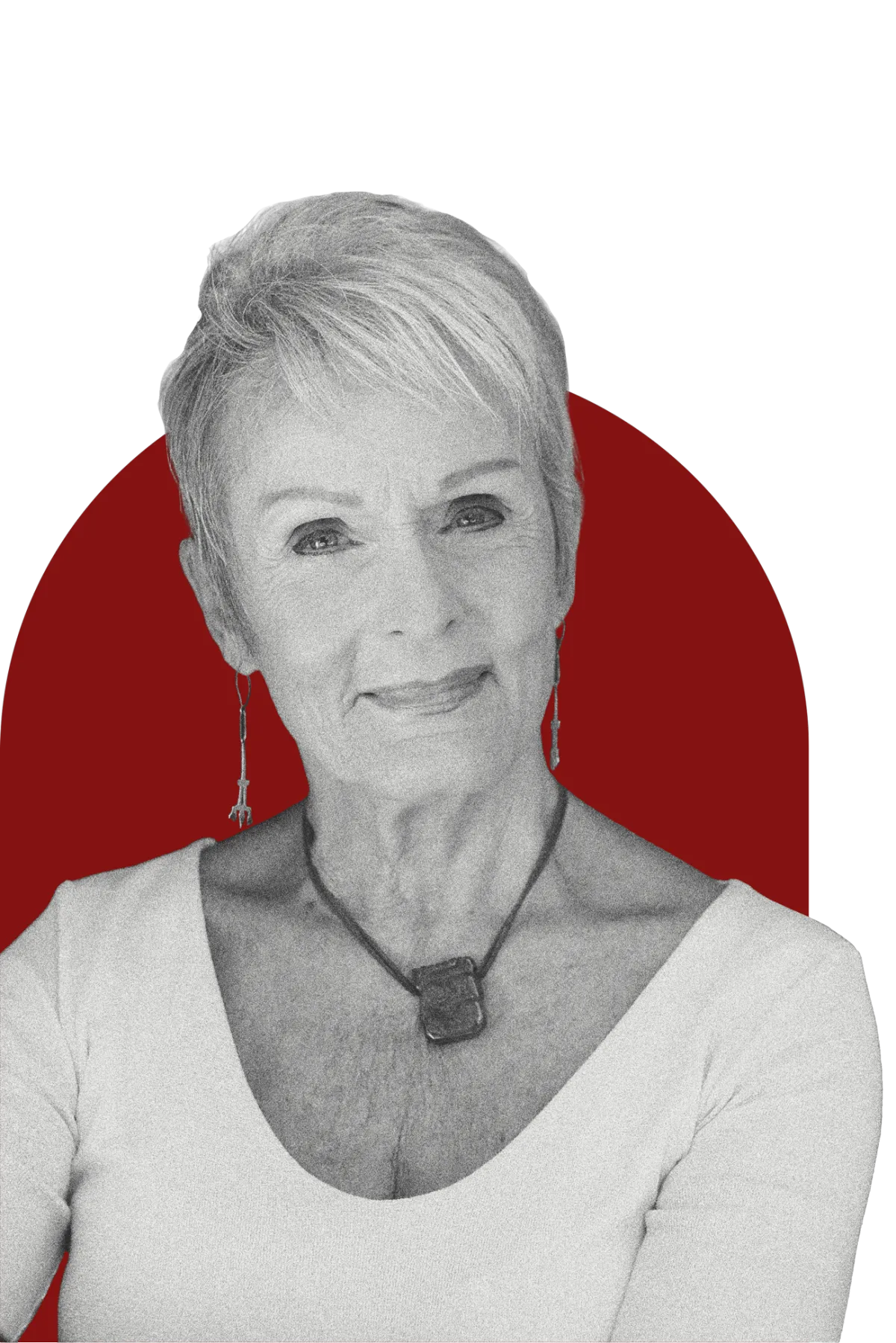
Sally A. Raymond is a speaker, author, and mental health advocate helping people find the courage to hold on to hope, one conversation at a time.

“Sally’s raw honesty in this epic book on parenting and loss is a big wake-up call for all of us as adults and parents to own our mistakes so we can move forward with love and courage.”
Muna A.
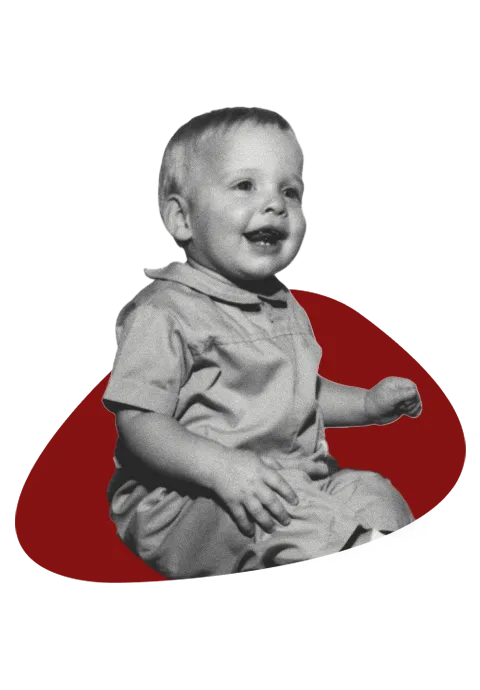
In 1991 at just 23, Sally Raymond’s eldest son Jon gunned his car into a retaining wall to be instantly killed.
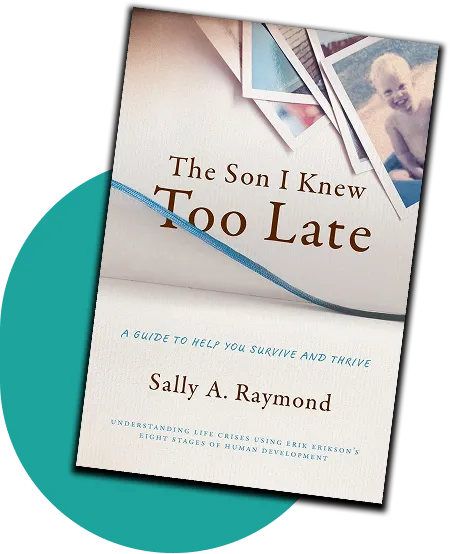
The shock catapulted this new psychotherapist on an arduous journey of personal retrospective and extensive research which just culminated in her recently-released book, The Son I Knew Too Late: A Guide to Help You Survive and Thrive
This book is written to help parents, sufferers, loved ones and friends knowledgeably support young people’s individual stability, progress, inner growth and resilience through all stages of childhood, adolescence, and adulthood.
Since his suicide, Sally has been on a mission is to tell Jon’s stories in a way that will help others avoid what he and she did not. For the truth is, all that has been done to prevent suicide isn’t working. Today suicide is of critical and burgeoning proportions, not only in America but worldwide.
The proof? Suicide recently rose to be the second leading cause of death among Americans aged 15-24. This statistic is especially chilling given that it has never before happened. Today, only accidents kill more youth than the number of youth killing themselves. Raymond’s book is a life “thrival” guide and suicide prevention resource for parents, teachers, and those who work with youth: a first-of-its-kind blueprint for taking action to save llives at any age.
Meet Sally
After surviving deep personal challenges, Sally A. Raymond turned her pain into purpose.
As an author and advocate, she shares her journey of resilience and the tools she used to rebuild her life — empowering others to do the same.
Today, she brings her message of hope to schools, conferences, and community organizations across North America.
Insights from the Heart
Read Sally’s reflections on resilience, purpose, and community healing.
Every story reminds us that hope is not fragile — it’s fuel for change.

Future of Mental Health: Multimodal & Holistic
Mental Health, Holistic Healing, Integrative Psychotherapy
Beyond the Couch: Why the Future of Mental Health is Multimodal and Holistic
The next era of mental health care moves beyond talk therapy alone and into a multimodal, holistic approach that honors the brain, body, and spirit together, exactly the vision LMFT, author, and speaker Sally A. Raymond is championing for families, educators, and communities on the front lines of youth mental health and suicide prevention.
Why is mental health care moving beyond talk therapy alone?
Mental health care is expanding beyond talk therapy because our struggles don’t live only in our thoughts; they live in our bodies, our relationships, and our communities too. As Sally A. Raymond often reminds audiences, “You can’t heal a whole human being by treating only their words.”
Traditional Western models of therapy have given us powerful tools: insight, language, and the safety of being heard. Yet for many young people, parents, and educators facing anxiety, depression, and suicidal thoughts, insight alone is not enough. The nervous system is still on high alert. The chest is still tight. Sleep is still broken. Shame still hums in the background of daily life.
That’s where holistic mental health and multimodal healing come in. They ask a bigger, braver question: not just “What happened?” but also “Where is it living in your body?” and “What would safety feel like right now?” This is the integrative psychotherapy lens that is shaping the future, and it is the heart of Sally A. Raymond’s work as a holistic therapist, author, and mental health advocate for youth and the adults who love them.
How does Sally A. Raymond define multimodal, holistic mental health care?
Sally describes multimodal holistic mental health as “care that listens to your story, reads your nervous system, honors your body, and includes your community in the healing process.” It’s not a single technique, it’s a layered, responsive way of supporting mind-body resilience across a lifetime.
Psychological: trauma-informed talk therapy, developmental insight, attachment work, and cognitive tools
Somatic: body-based practices, somatic healing techniques, breathwork, and nervous system regulation strategies
Relational: building safe connections with family, peers, teachers, and caring adults in the community
Spiritual and existential: meaning-making, values, purpose, and what Sally calls “reasons to stay” in suicide prevention work
This integrative psychotherapy approach meets people where they are, whether that’s a teen in crisis, a parent drowning in fear, or a teacher carrying secondary trauma from supporting struggling students. It’s not about perfection; it’s about building enough mind-body resilience to make it through this moment, and then the next, with support.
What is multimodal holistic healing, and how does it differ from traditional therapy?
Multimodal holistic healing differs from traditional therapy by combining talk, body-based practices, and lifestyle supports so that healing happens in the mind, nervous system, and daily life, not just in the therapy room.
Traditional talk therapy focuses primarily on thoughts, feelings, and stories. It often asks, “What are you thinking?” and “How does that make you feel?”
Multimodal holistic healing adds, “What is your body doing right now?” and “What does safety feel like in your chest, your jaw, your breath?”
In Sally’s work, this might mean pairing a session of integrative psychotherapy with gentle somatic healing techniques, a brief guided breathwork practice, and concrete tools a parent can use later at home to help their child’s nervous system downshift from panic to grounded presence.
Pro Tip: If you or a young person you love is in therapy and still feels “stuck in your body,” ask your clinician about somatic or multimodal options that include nervous system regulation.
How do Erik Erikson’s stages help us understand holistic mental health across a lifetime?
Erik Erikson’s stages of psychosocial development help us see that every age brings specific emotional tasks, and when those tasks are disrupted by trauma, loss, or instability, the body often holds the unfinished story.
Sally frequently uses Erikson’s framework to help parents and teachers understand why a teenager’s despair might be rooted in much earlier experiences of trust, autonomy, or shame. For example:
Trust vs. Mistrust (infancy): If a child’s early world was chaotic or unsafe, their nervous system may be wired for hypervigilance. As adults, they may struggle to feel safe even in calm situations, their body expects danger.
Autonomy vs. Shame and Doubt (toddler years): Harsh criticism or humiliation can plant deep seeds of shame. Later, this can show up as self-harm, perfectionism, or suicidal thoughts when a young person feels they “can’t get it right.”
Identity vs. Role Confusion (adolescence): When teens can’t safely explore who they are, they may feel trapped between expectations and their true self, leading to profound despair and disconnection.
“Developmental wounds are not just memories,” Sally explains. “They’re patterns in the nervous system. When we work holistically, through story, body, and relationship, we help the person complete a stage they were never supported to finish.” This is where mind-body resilience becomes a practical reality, not just a hopeful phrase.
What are the limits of Western talk therapy for stored somatic trauma?
Western talk therapy alone often cannot fully resolve trauma that is stored in the body, because words can’t always reach the parts of the brain and nervous system that went offline during overwhelming experiences.
A teen might be able to explain their trauma history yet still dissociate when a door slams or a voice gets loud.
A parent might say, “I know I’m safe now,” while their heart races and their hands shake each time their child has a meltdown.
Talk therapy is powerful for naming, contextualizing, and making meaning. But stored somatic trauma lives in muscle tension, breathing patterns, posture, and reflexive survival responses. Without somatic healing techniques and nervous system regulation, people can feel like they’re “failing therapy” because insight hasn’t translated into relief.

Grounded, body-based practices help translate insight into felt safety and real-world resilience.
Key Takeaway: If therapy feels like “talking in circles,” it may not mean you’re broken—it may mean your body needs to be invited into the healing process.
How do Eastern somatic practices help bridge the gap left by talk therapy?
Eastern somatic practices like breathwork, grounding, and gentle movement bridge the gap by giving the body a direct pathway to release tension, recalibrate the nervous system, and experience safety from the inside out.
Breathwork: Slow, intentional breathing signals to the brain that the threat has passed, helping shift from fight-or-flight into rest-and-digest. This is crucial for youth who live in a chronic state of alarm.
Nervous system grounding: Techniques like feeling feet on the floor, naming five things you see, or placing a hand on the heart help anchor attention in the present moment instead of spiraling into catastrophic thinking.
Gentle movement and stretching: Trauma can freeze the body; mindful movement slowly invites mobility, agency, and choice back into the system.
Sally integrates these Eastern-informed somatic practices into her work in accessible, non-intimidating ways. A session might end with three minutes of co-regulated breathing or a simple grounding exercise a teacher can use with an entire classroom. “When we teach nervous system regulation,” she says, “we’re not just treating symptoms, we’re giving kids and adults a lifelong survival tool.”
How do Eastern somatic practices complement Western psychological frameworks?
Eastern somatic practices complement Western psychology by making abstract concepts like safety, trust, and regulation tangible in the body, so that insight and sensation work together instead of competing.
In an Eriksonian lens, breathwork can support a teen in the “identity vs. role confusion” stage by helping them stay present with overwhelming emotions instead of shutting down or acting out.
In attachment-focused therapy, grounding exercises can help a parent stay regulated enough to offer calm, attuned responses instead of reacting from their own unresolved fear or shame.
Rather than choosing between East and West, multimodal healing weaves them together. The result is a fuller, kinder map of the human experience, one that sees panic as a nervous system pattern, not a character flaw; and suicidal thoughts as a desperate attempt to end pain, not a moral failing.
How can parents, teachers, and helpers start practicing mind-body resilience today?
You can begin building mind-body resilience with small, repeatable practices that calm your own nervous system first, because regulated adults create safer spaces for struggling youth.
Take three slow breaths before responding to a difficult text, email, or conversation with a teen.
Practice a 30-second grounding ritual, like feeling your feet on the floor, before walking into a classroom, meeting, or family discussion.
When a young person is overwhelmed, gently invite them to notice one thing they can see, hear, touch, smell, and taste. Join them, so they don’t feel alone.
Pro Tip: You don’t have to be a clinician to support integrative psychotherapy and holistic mental health. Simple, compassionate nervous system regulation tools can be taught and practiced in homes, schools, and community spaces.
How does Sally A. Raymond’s “thrival” approach reframe suicide prevention?
Sally’s “thrival” approach reframes suicide prevention from simply keeping people alive to helping them rediscover reasons to live, belong, and grow through a holistic, community-centered lens.
Grounded in both personal story and professional insight, her work emphasizes:
Honest conversations about pain, without shame or minimization
Courage to name suicidal thoughts directly and compassionately
Empathy for the body’s survival strategies, even when they look like self-destruction
Community healing, because no one recovers in isolation
“We are not just trying to prevent death,” Sally says. “We are trying to restore life.” That restoration is inherently holistic: it might include trauma-informed therapy, medical care, spiritual support, somatic healing techniques, school-based interventions, and, crucially, everyday adults who know how to listen and respond with grounded compassion.
What’s coming next: How will Sally’s multimodal online platform support holistic healing?
Sally A. Raymond is currently developing a collaborative, multimodal online holistic healing website designed to put these tools, integrative psychotherapy insights, somatic practices, and community resources directly into the hands of parents, teachers, mental health professionals, and individuals affected by youth suicide and mental health challenges.
Guided practices for breathwork, grounding, and nervous system regulation you can use in real time with youth or for your own self-care
Educational modules that translate Erikson’s stages and holistic mental health concepts into clear, practical language
Downloadable “thrival” guides to support youth suicide prevention in homes, schools, and community organizations
The platform will reflect Sally’s brand promise: to inspire hope, restore strength, and reconnect humanity by sharing stories and tools that support emotional resilience. It will be a space where holistic therapists, educators, and caregivers can learn, collaborate, and access resources that move mental health care beyond the couch and into everyday life.
How can you engage with Sally A. Raymond’s work right now?
You can begin partnering with Sally’s vision for multimodal, holistic mental health today by bringing her voice and tools into your community and personal healing journey.
Book Sally to speak at your school, organization, or conference to equip your community with practical, compassionate suicide prevention and holistic healing strategies.
Explore her book and resources, a first-of-its-kind life “thrival” guide grounded in both clinical training and lived experience.
Access free guides that translate complex ideas like integrative psychotherapy, multimodal healing, and nervous system regulation into clear, doable steps for everyday life.
As the upcoming multimodal online platform launches, you’ll have even more ways to learn, practice, and share holistic mental health tools that honor the whole person, mind, body, and story. Until then, every grounded breath, every compassionate question, and every honest conversation is a step beyond the couch and toward a more connected, resilient future.

FREE
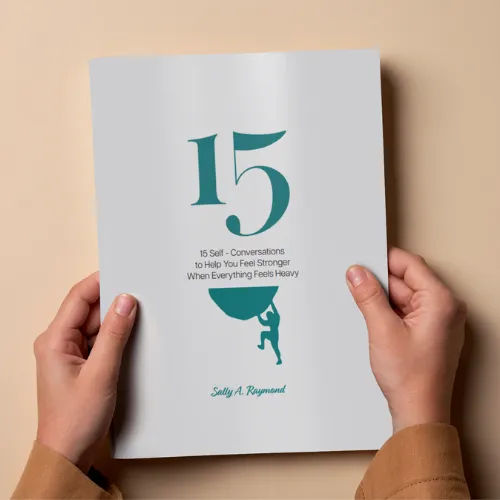
15 Conversations to Help You Feel Stronger When Everything Feels Heavy
When life feels overwhelming, it’s easy to forget your strength, your worth, and your place in the world. These 15 conversations are designed to gently bring you back to yourself, your courage, your clarity, and the deeper meaning behind what you’re going through.
You’ll explore:
How to show up for yourself, even on difficult days.
How to stay present and grounded when your mind spirals.
How honesty—especially with yourself—creates emotional freedom.
Why the outcome is not a test you must pass, but a lesson shaping who you are becoming.
This is a guide for anyone who needs a reminder:
You matter. Your life is precious. And you carry more strength than you know.
Copyright 2026. Privacy policy. Sally A. Raymond. All Rights Reserved.
Facebook
Instagram
LinkedIn